Screening earnings calls and filings for supply-chain risk
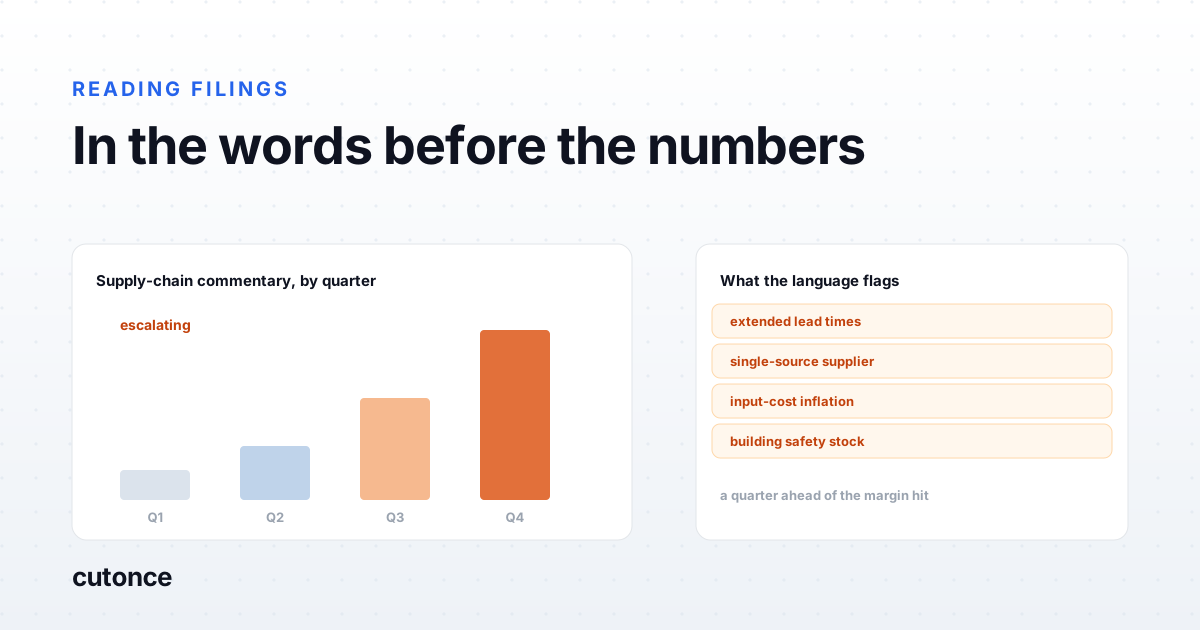
- Supply-chain problems appear in management's words a quarter or two before they appear in gross margin. Screening the language is an early-warning system the financial statements do not give you.
- The signal is in specific vocabulary: shortages, extended lead times, allocation, single-source or concentrated suppliers, input-cost inflation, tariffs, freight and logistics, and inventory building 'to protect against disruption'.
- The change matters more than the level. A company going from no supply-chain commentary to heavy commentary quarter over quarter is the alert; the ones that always mention it are background.
- Filings add the structural view the call does not: risk factors disclose supplier concentration and single-source dependencies, which is where a temporary disruption becomes a durable vulnerability.
Gross margin is a lagging indicator of supply-chain trouble. By the time a disruption compresses the reported number, it has usually been visible for a quarter or two in something less structured: the way management talks about it on the call. A supplier going on allocation, lead times stretching, a critical input spiking - these get discussed in real time, while the company is still working through old inventory and hedges, well before they hit the income statement. That gap is an opportunity. Screening the language for supply-chain risk, across a universe and over time, is an early-warning system the financials cannot give you. Here is how to build it.
The vocabulary of supply-chain stress
Supply-chain risk has a recognizable vocabulary, and the first job of the screen is to pull the passages that use it out of every transcript and filing:
- Availability: shortages, allocation, constrained supply, inability to meet demand.
- Timing: extended or elongated lead times, delays, expediting.
- Concentration: single-source, sole supplier, key vendor, limited alternatives.
- Cost: input-cost inflation, raw-material prices, tariffs, surcharges.
- Logistics: freight, shipping, port, transportation, distribution.
- Response: building inventory or safety stock "to protect against disruption", dual-sourcing, reshoring.
Pulling these passages is the same transcript-and-filing extraction as any document workflow - the scaling mechanics are in analyzing earnings call transcripts at scale. The difference is what you do with them next.
The change is the alert, not the level
Some businesses always talk about their supply chain - it is central to how they operate, and a steady level of commentary is just background. The signal is not the level but the move: a company that gave almost no supply-chain commentary last quarter and devotes a large share of this call to shortages and lead times is telling you something is developing. So the screen has to diff, quarter over quarter, and rank by the rate of increase in supply-chain language, not the raw amount. The names where the commentary is escalating fastest are the alert list.
Filings add the structural view
The call tells you what is happening now; the filing tells you how exposed the company is if it gets worse. Risk factors and the business section of a 10-K disclose supplier concentration and single-source dependencies - the structural vulnerabilities that turn a temporary disruption into a durable problem. A company dependent on one supplier for a critical component carries a categorically different risk than one with a diversified base, and that shows up in the filing, not the call. Reading the filing language for these dependencies is the same skill as screening a 10-K for red flags, pointed at one specific category of risk.
Catch the events, not just the quarter
Supply-chain shocks do not wait for the quarterly call. A lost supplier, a plant closure, or a force-majeure event often files as an 8-K between reports, and a company that pre-announces a supply-driven guidance cut does the same. Pairing the quarterly language screen with 8-K monitoring closes the gap, so a material supply-chain event reaches you when it files rather than three months later on the call.
What breaks
- Keyword matching without context."Supply" and "chain" appear constantly in benign contexts. The screen needs to read the passage for genuine stress, not match a term.
- Scoring the level, not the change. Ranking by total mentions just surfaces the businesses that always discuss logistics. The quarter-over-quarter move is the signal.
- Ignoring the structural exposure. A mild mention from a single-source-dependent company can matter more than heavy commentary from a diversified one. The filing context changes how a mention should be weighted.
Running it as a pipeline
In Cutonce this is a saved pipeline: a transcript and filings node pulls the supply-chain passages for the universe, an AI node scores each company on the intensity of genuine supply-chain stress and diffs it against the prior quarter, and a filings step flags the structural exposures - supplier concentration, single-source dependencies - that raise the stakes. The output is a ranked list of the names where supply-chain risk is escalating fastest, with the passages attached, delivered on a schedule and paired with an 8-K alert for events between calls.
What you get is lead time. Instead of learning about a supply-chain problem when it finally compresses a reported margin, you see it building in the language a quarter or two ahead, across your whole universe, ranked by where it is getting worst.
Note: this is not investment advice. A language screen produces an early-warning watchlist, not a conclusion - management can discuss a risk that never materializes, or stay quiet about one that does. Verify any name against its actual filings and results before acting on it.
Frequently asked
How do you screen for supply-chain risk in earnings calls? Pull the supply-chain-related passages from every transcript in the universe - references to shortages, lead times, allocation, supplier concentration, input costs, tariffs, and logistics - and score each company on how much and how urgently management is discussing them. The most useful output is the change: which companies moved from little supply-chain commentary to a lot quarter over quarter. That shift is an early-warning signal that usually precedes the impact on margins.
Why do earnings calls signal supply-chain problems before the financials? Because management sees the disruption in real time - a supplier goes on allocation, lead times stretch, a key input spikes - and talks about it on the call while it is still working through inventory and hedges before it hits reported gross margin. By the time the margin compression shows up in the income statement, the language has usually been flagging it for a quarter or two. Reading the words is how you get ahead of the number.
What supply-chain risks show up in 10-K filings? The structural ones. Risk factors and the business section disclose supplier concentration and single-source dependencies, geographic exposure, and reliance on specific components or materials. Those tell you where a temporary disruption could become a durable problem - a company dependent on a single supplier for a critical input carries a different risk than one with a diversified base, and that shows up in the filing rather than the call.
Can supply-chain risk screening run across a whole universe? Yes, and that is where it earns its value. Reading one company's call for supply-chain stress is easy; tracking the language across a whole sector or index, quarter over quarter, and flagging the names where it is escalating is the job a pipeline does. The output is a ranked list of the companies where supply-chain commentary is rising fastest, with the passages attached, so your attention goes where the risk is building.