Monitoring 8-K filings for guidance changes and material events at scale
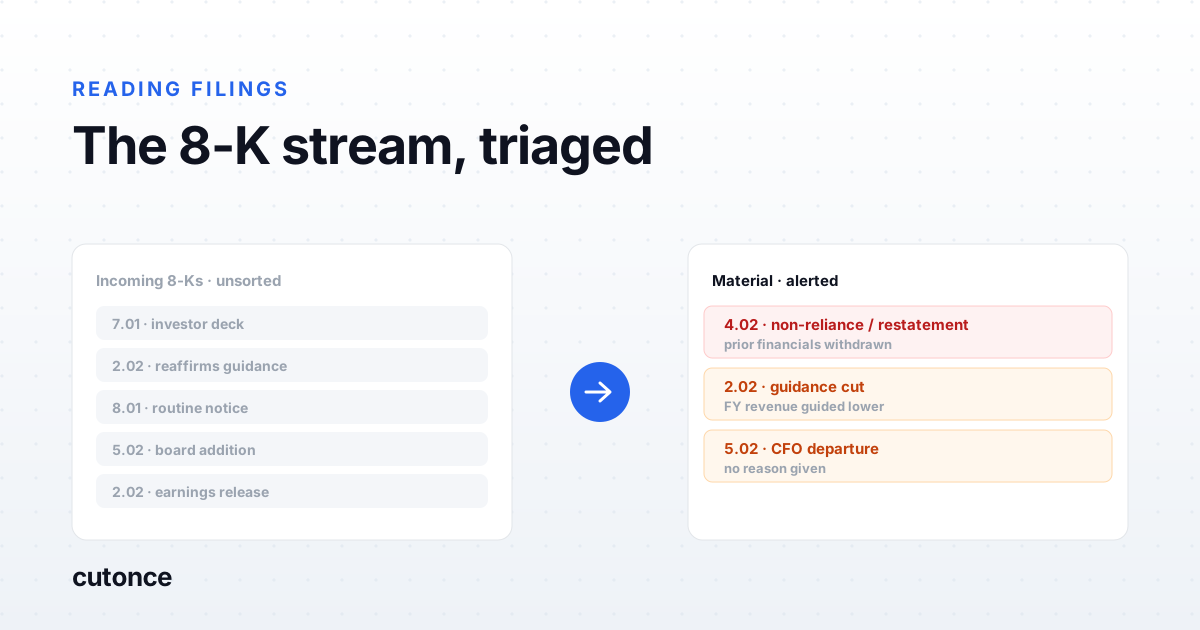
- The 8-K is the timeliest filing there is - due within four business days of a triggering event - so it is where a material change shows up before the next 10-Q. That timeliness is its whole value and its whole difficulty.
- The item number carries most of the triage signal. Results (2.02), material agreements (1.01/1.02), executive changes (5.02), and auditor or restatement items (4.01/4.02) are where the substance concentrates; 7.01 and 8.01 are mixed.
- Manual monitoring breaks on three things: volume, unpredictable timing, and boilerplate. You cannot watch a whole universe by hand, events do not wait for you to check, and most 8-Ks are routine.
- The workflow ingests new 8-Ks for the universe, classifies each by item, extracts the substance from the exhibit text, separates material from routine, and alerts - so a guidance cut or an auditor change reaches you the day it files, not the next time you look.
Most of what you read about a company is scheduled: the 10-Q every quarter, the 10-K once a year, the call on a date you can put in a calendar. The 8-K is the exception, and it is the one that moves things. It is the filing a company makes when something material happens between the scheduled reports - a guidance change, an executive leaving, a big contract signed or lost, an auditor swapped out - and it is due within four business days of the event. That timeliness is the entire point of the 8-K, and it is also exactly why it is hard to watch. Scheduled filings you can plan to read. Events do not wait for you to check.
Why the 8-K is the timeliest signal
The 8-K exists to close the gap between quarterly reports. If a company's CFO resigns in the second week of the quarter, you do not learn it from the 10-Q eight weeks later; you learn it from an 8-K within days. The same is true for a guidance revision, a material acquisition, or a determination that prior financials can no longer be relied on. For anyone covering a universe, the 8-K stream is the closest thing to a live feed of things that actually changed, which makes monitoring it well a genuine edge and monitoring it badly a constant source of being last to know.
The item numbers that carry signal
Every 8-K is tagged with one or more item numbers, and the number is the first and best triage tool you have. A short map of the ones worth watching:
| Item | What it discloses | Why it matters |
|---|---|---|
| 2.02 | Results of operations and financial condition | Earnings, and very often the guidance update, land here. |
| 1.01 / 1.02 | Entry into / termination of a material agreement | A major contract, financing, or customer won or lost. |
| 5.02 | Departure or appointment of directors and officers | Executive change - a CFO exit reads differently than a routine board add. |
| 4.01 | Change in the registrant's certifying accountant | An auditor change is worth a look, especially if unexplained. |
| 4.02 | Non-reliance on previously issued financials | A restatement. One of the highest-signal items there is. |
| 7.01 / 8.01 | Regulation FD disclosure / other events | Catch-alls, routine to important - read the content, not just the code. |
The code gets you most of the way, but not all of it. Companies sometimes file genuinely material news under a generic 8.01, and the substance of a 2.02 can be a routine reaffirmation or a guidance cut - the same item number, opposite meanings. So the item does the first pass and the content does the second.
Why manual monitoring breaks
Watching 8-Ks by hand fails on three things at once:
- Volume. A universe of a few hundred names produces a steady stream of 8-Ks, most of them routine. Reading all of them to find the few that matter is not a good use of an analyst.
- Timing. Events file when they file, not when you check. The value of an 8-K decays fast, and a guidance cut you read three days late is a very different thing than one you read the morning it filed.
- Boilerplate. Most 8-Ks are procedural. The signal-to-noise ratio is low enough that manual watching gets abandoned within a couple of weeks, which is the same as not monitoring at all.
The workflow
The reliable pattern is to over-collect and triage, not to filter early:
- Ingest. Poll for new 8-K filings for every ticker in the universe, keyed to the company and the filing date, so nothing depends on remembering to look.
- Classify by item. Split the stream by item number so the high-signal items (2.02, 5.02, 4.02, 1.01/1.02) separate from the routine ones automatically.
- Extract the substance. Read the filing body and its exhibits for what actually happened - a guidance number that moved, who left and whether a reason was given, the size and counterparty of an agreement - rather than trusting the item label alone.
- Separate material from routine, then alert. Route the material events to a channel with the source text attached, so a person confirms materiality on a short ranked list the day it files.
The design principle is that the item number and the content do two different jobs. The number is cheap triage; the content is the check that catches the material 8.01 and drops the routine 2.02. Skipping either one is where automated monitoring usually goes wrong.
Separating material from routine
The hard part is not collecting 8-Ks, it is deciding which ones deserve attention without a person reading every one. A guidance reaffirmation and a guidance cut can file under the same item on the same day for two different companies. So materiality has to be judged on the extracted substance - did a number move, did a named officer leave, is there a non-reliance statement - not on the item code alone. The output that works is a ranked list: the material events first, each with the sentence from the filing that makes it material, and the routine stream still available but out of the way.
Running it as a pipeline
In Cutonce this runs as a scheduled pipeline: a filings node watches EDGAR for new 8-Ks across your universe, a classifier splits them by item, an AI node reads the body and exhibits and pulls the substance, and material events get sent to Slack or email with the source text attached. Because it runs on a schedule rather than when you remember to check, a CFO departure or a guidance cut reaches you the day it files, on a short list you can actually read, with the routine filings triaged out of the way. It pairs naturally with analyzing earnings calls at scale, since the 8-K that carries the results and the call that explains them are the same event from two angles.
Note: this is not investment advice. Automated monitoring produces a triaged list, not a conclusion, and item codes and models both misclassify. Keep the source filing text with every alert and confirm materiality against the company's actual 8-K before acting on it.
Frequently asked
What is an 8-K and why does it matter for monitoring? An 8-K is the current report US public companies file to disclose material events between their quarterly and annual reports, generally within four business days of the triggering event. It matters for monitoring because it is the fastest official channel a company has: earnings, guidance updates, executive departures, major agreements, and auditor changes appear in an 8-K well before they would surface in the next 10-Q. If you want to know something changed at a company you cover, the 8-K is usually where it shows up first.
Which 8-K item numbers carry the most signal? Item 2.02 (results of operations, where earnings and often guidance land), Items 1.01 and 1.02 (entry into or termination of a material agreement), Item 5.02 (departure or appointment of directors and officers), and Items 4.01 and 4.02 (a change in the certifying accountant, and non-reliance on previously issued financials - a restatement). Items 7.01 (Regulation FD) and 8.01 (other events) are catch-alls that range from routine to important, so they need the content read rather than the code alone.
How do you monitor 8-Ks across a whole watchlist? Poll for new 8-K filings for every ticker in the universe, classify each by its item number, extract the substance from the filing and its exhibits, separate material events from routine ones, and route the material ones to an alert. The item number does the first-pass triage and the extracted content does the second pass, so a guidance cut buried in a 2.02 exhibit gets surfaced while a routine investor-deck 7.01 does not.
Can 8-K monitoring be automated without missing the important ones? The reliable pattern is to over-collect and then triage, rather than filter early. Pull every new 8-K for the universe, classify by item, and read the content of the higher-signal items rather than trusting the code alone, because material news sometimes files under a generic item. Keep the source text with each alert so a human confirms materiality quickly. The goal is not zero human review; it is that the review happens on a short, ranked list the day things file.