How to screen for quality compounders and financial strength
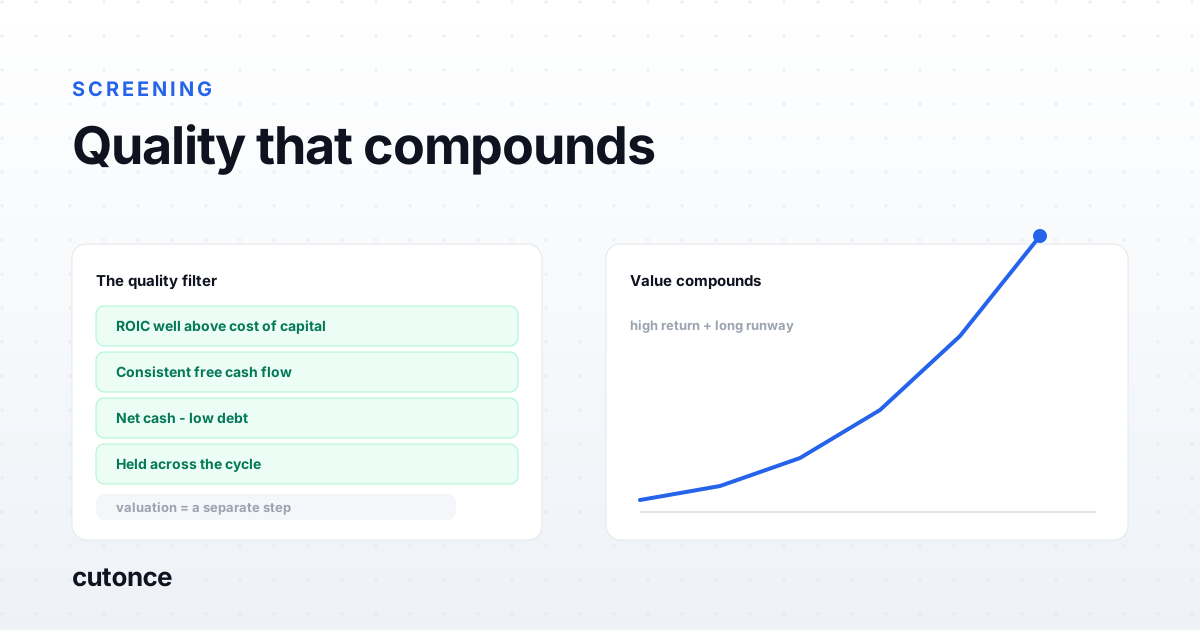
- A quality compounder is not just a profitable company - it is one that earns returns on invested capital well above its cost of capital and can redeploy cash at those returns for years. High ROIC plus a long reinvestment runway is the definition.
- Balance-sheet strength is what separates a durable compounder from a fragile one. A high return earned with heavy leverage is not the same as one earned from a cash-rich, low-debt position - the second survives a bad year.
- The trap is quality at any price. A great business bought at a punishing multiple can still be a poor investment; the screen finds quality, and valuation is a separate, deliberate step.
- Screen on several years, not one. A single strong year can be a cyclical peak; consistency of ROIC and free cash flow across a full cycle is what makes 'compounder' more than a label.
"Quality compounder" gets used loosely enough to mean almost any stock someone likes. Made precise, it is a specific and screenable thing: a business that earns a high return on the capital it invests, and can keep reinvesting cash at those high returns for years. That second half is what does the compounding - a company earning great returns but with nowhere to redeploy the cash is a cash cow, not a compounder. Screen for both halves, insist on a balance sheet that can survive a bad year, and keep valuation as a separate step, and you have a repeatable way to find them. Here is the build.
What actually makes a compounder
The engine is return on invested capital above the cost of capital, sustained. A business that turns each dollar of invested capital into well above its cost of capital, and can put more dollars to work at similar returns, grows its intrinsic value at a rate the market often underappreciates over long horizons. The two ingredients are therefore the return (high, durable ROIC) and the runway (the ability to reinvest a large share of cash at that return). Miss either and the "compounder" label does not hold. ROIC is worth understanding precisely before you screen on it - the definition and why it matters are in the ROIC glossary entry.
Balance-sheet strength is the durability test
Two companies can post the same return on capital and be completely different businesses if one earned it with a mountain of debt and the other from a net-cash position. The screen has to distinguish them, because durability is the whole point of buying quality. A cash-rich, low-debt company can keep investing through a downturn; a leveraged one gets forced to retrench, refinance at a bad time, or dilute. So a quality screen and a balance-sheet screen belong together:
| Signal | What you are checking |
|---|---|
| ROIC vs cost of capital | Returns are genuinely above the hurdle, not just positive. |
| Consistency of ROIC and FCF | Held across several years, not a single cyclical peak. |
| Net cash / low leverage | Cash near or above debt; the "cash-rich, no debt" filter. |
| Interest coverage | Obligations covered comfortably, with room for a bad year. |
| Free cash flow | Real cash generation funding the reinvestment, not accounting profit. |
Free cash flow is the input worth being strict about, because it is the hardest to manipulate and the clearest evidence that the returns are real rather than reported.
Screen the cycle, not the year
A single strong year is not durability - it might be a cyclical peak, a one-off gain, or a favorable comparison. The screen should demand consistency: ROIC above the hurdle across several years, free cash flow that does not swing wildly, and a balance sheet that stayed clean through the last soft patch. That consistency requirement is also what protects a quality backtest from flattering itself, a trap covered in why backtested screens fail live.
Quality is not a buy signal
The most expensive mistake with a quality screen is treating it as a buy list. It is not - it is a list of good businesses, and a good business bought at a punishing price can still be a poor investment. Valuation has to be a separate, deliberate step after the quality cut: take the shortlist of durable compounders and only then ask what you would pay. Keeping the two steps apart is what stops a quality screen from turning into a momentum-chasing list of whatever is already expensive.
Running it as a pipeline
In Cutonce this is a saved pipeline: a data node pulls multi-year ROIC, free cash flow, leverage, and coverage for the universe, a filter enforces the quality and balance-sheet thresholds, and a score ranks the survivors by durability. The cash-rich, low-debt filter drops the fragile names, and the output is a ranked shortlist of compounders in a sheet or Slack - which you then value separately. Because it is saved, it reruns as fundamentals update, so the quality list stays current. For where this sits among screener approaches generally, see the best stock screeners in 2026.
The result is not a portfolio. It is a disciplined, repeatable shortlist of the businesses worth the real work of valuing - which is exactly the point at which a screen should hand off to judgment.
Note: this is not investment advice. A quality screen identifies businesses that pass a set of thresholds, not stocks to buy, and it ignores price entirely. Verify any name and value it yourself before acting on it.
Frequently asked
What is a quality compounder stock? A quality compounder is a business that earns a high return on invested capital (well above its cost of capital) and can reinvest a large share of its cash back into the business at similar returns for a long time. That combination - high returns plus a long runway to redeploy capital - is what lets intrinsic value compound. Screening for one means looking for durable, consistent ROIC and free cash flow, not a single good year.
How do you screen for balance-sheet quality? Look for a company that funds itself rather than leaning on debt: low or negative net debt (cash exceeding borrowings), comfortable interest coverage, and free cash flow that covers its obligations with room to spare. A 'cash-rich, no debt' filter - net cash on the balance sheet and minimal leverage - surfaces businesses that can keep investing through a downturn instead of being forced to retrench or dilute.
What metrics identify a quality compounder? Return on invested capital above the cost of capital, sustained over several years; strong and consistent free cash flow; a reinvestment rate high enough to fund growth; and a clean balance sheet (net cash or low leverage, solid coverage). No single metric is enough - the point is the combination, held consistently across a cycle rather than in one flattering year.
Is a quality screen enough to buy a stock? No. A quality screen finds good businesses; it says nothing about price. A wonderful company bought at a demanding valuation can still disappoint, so valuation has to be a separate, deliberate step after the quality screen. Treat the screen as a shortlist of businesses worth valuing, not a buy list.