Why your backtested screen beats the market but loses live
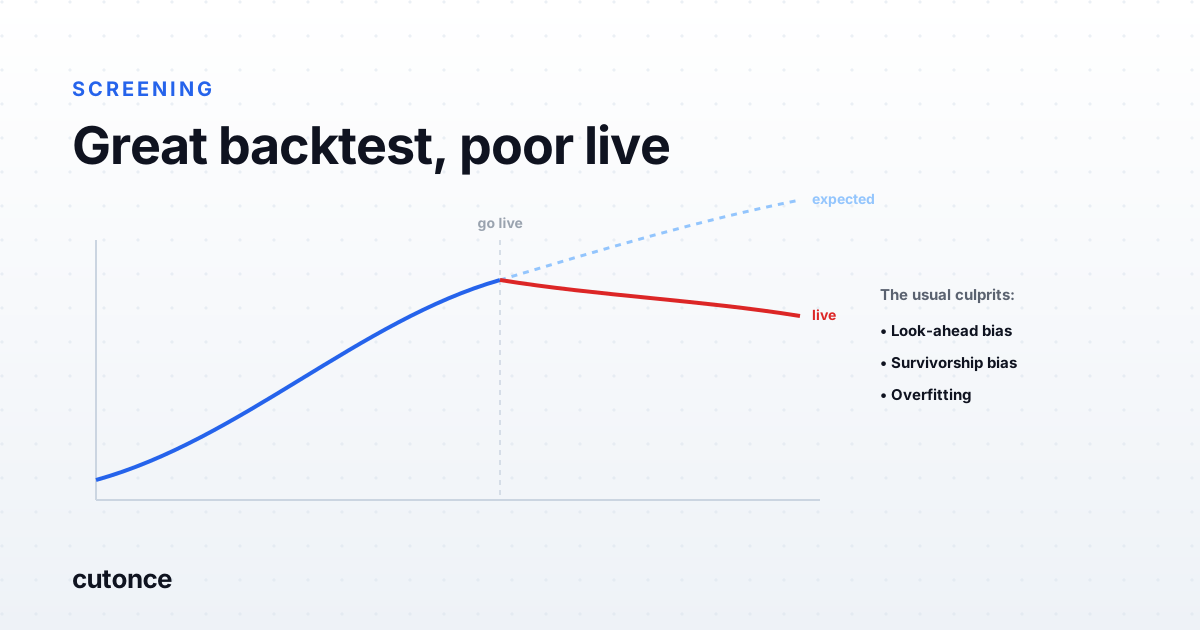
- A screen that beats the backtest and underperforms live is rarely unlucky. The backtest was almost always inflated by look-ahead bias, survivorship bias, or overfitting - often all three.
- Look-ahead bias means using data you would not have had at the time: restated financials, or fundamentals dated to the period end rather than when they were actually filed. Point-in-time data is the fix.
- Survivorship bias means testing only on companies that still exist, quietly deleting the failures. It makes almost any long strategy look good. You need a universe that includes delisted and dead names.
- Overfitting means tuning rules until they fit the past. The more knobs you turn and the better the backtest looks, the less likely it survives live. Fewer rules, an economic rationale, and out-of-sample testing are the defense.
Almost every analyst who backtests screens has had this experience: a screen that beautifully beats the market in the backtest, goes live, and does nothing - or worse. It feels like bad luck. It is almost never bad luck. A backtest that looks great and a live result that disappoints is the classic signature of a test that gave the strategy advantages it will not have in real time. There are three usual culprits, and they are specific and fixable. Here they are, and how to build a screen that survives contact with the market.
Why does a backtested screen beat the market then lose live?
Because the backtest and live trading are not the same game. In a flawed backtest, the strategy quietly benefits from things that are impossible in real time: knowing numbers before they were public, trading a universe with the failures deleted, and rules hand-tuned to the exact history you tested on. Live, all three advantages vanish, and the edge goes with them. The good news is that each culprit has a name and a fix.
Culprit 1: Look-ahead bias
Look-ahead bias is using data in the backtest that you would not actually have had on the trade date. The most common and most damaging form in fundamental screening is date-stamping: a data vendor tags Q4 fundamentals to the fiscal period end (say December 31) when the 10-K was not filed until late February. If your backtest screens on those numbers as of January, it is trading on information that was not public for another month. That single error can manufacture an edge that does not exist.
Restated financials are the other form: testing on the corrected numbers rather than the ones originally reported. The fix for both is point-in-time data - fundamentals dated to when they were actually filed and reflecting what was known then, not what we know now.
Culprit 2: Survivorship bias
Survivorship bias is running the backtest only on companies that still exist today. It sounds innocent and it is devastating, because it silently deletes every company that went bankrupt, got delisted, or was acquired at a loss - exactly the outcomes a strategy needs to be tested against. A universe of today's survivors makes almost any long strategy look profitable, because you have removed the ways it could have failed.
The fix is a survivorship-free universe: one that includes companies as they existed at each point in the past, dead and delisted names included, so your screen has to contend with the losers as well as the winners.
Culprit 3: Overfitting
Overfitting is tuning the screen until it fits the history. Every extra rule, every oddly specific threshold ("price-to-book below 1.4, but only if ROE is above 11.5%") is a knob you turned because it improved the backtest - not because it reflects how the world works. The more knobs and the better the backtest looks, the more you have fit the noise in your sample rather than a durable effect, and noise does not repeat.
The defenses are old and reliable: keep the rule set small, require an economic rationale for every rule before it goes in, prefer round and robust thresholds over precise ones, and validate on out-of-sample data - a period or universe the screen was not built on. If performance falls apart out of sample or wobbles wildly when you nudge a parameter, it was overfit.
The quieter culprits: costs, liquidity, capacity
Even a clean backtest can overstate live returns if it ignores frictions. Transaction costs and slippage eat the edge of high-turnover screens. Illiquid small-caps that look great on paper cannot be bought in size without moving the price. And a strategy that works on a few million may not work on a few hundred. These are less about bias and more about realism, but they close the same gap between backtest and reality.
Building a screen you can actually trust
Put together, the discipline is straightforward to state and easy to skip:
| Bias | Symptom | Fix |
|---|---|---|
| Look-ahead | Edge that seems too clean, concentrated near report dates | Point-in-time data dated to filing, not period end |
| Survivorship | Almost any long strategy "works" | Universe including delisted and dead names |
| Overfitting | Great in-sample, collapses out-of-sample or on small tweaks | Fewer rules, economic rationale, out-of-sample test |
| Frictions | Backtest ignores costs, or holds illiquid names | Model costs and slippage; cap on liquidity |
This is where the tooling matters. A screen you can trust needs point-in-time fundamentals, a universe that remembers the companies that died, and a way to test the same logic out of sample - not a screener that quietly runs on today's survivors with today's restated numbers. On Cutonce you build the screen as an explicit, re-runnable pipeline, so the same criteria you tested are the ones that run live, quarter after quarter - and you keep control of the rules rather than trusting a black box. The goal is not a prettier backtest; it is the far less common thing, a screen whose live results look like its test.
Note: this is educational, not investment advice. Past performance - backtested or live - does not predict future returns, and even a methodologically clean backtest is an estimate, not a promise. Treat every screen as a hypothesis to monitor, not a guarantee.
Frequently asked
Why does my backtested screen beat the benchmark but underperform live? Almost always because the backtest was inflated by one of three biases: look-ahead bias (using data you would not have had in real time), survivorship bias (testing only on companies that still exist), or overfitting (tuning the rules to fit the past). Live trading removes those advantages, so the edge disappears. It is usually a flawed test, not bad luck.
What is look-ahead bias in a stock screen? Using information in the backtest that was not actually available on the date you would have traded. The most common form is dating fundamentals to the fiscal period end instead of the filing date - so your screen 'knew' Q4 numbers weeks or months before they were public. Point-in-time data, dated to when it was filed, prevents it.
What is survivorship bias? Running a backtest only on companies that still exist today, which silently excludes every company that went bankrupt, was delisted, or was acquired at a loss. Since failures are removed, almost any strategy looks profitable. A survivorship-free universe includes those dead and delisted names as they existed at the time.
How do I know if my screen is overfit? Warning signs: many rules and thresholds, oddly specific cutoffs, a backtest that looks too good, and performance that collapses when you change a parameter slightly or test a different period. The defenses are keeping the rule set small, requiring an economic reason for every rule, and validating on out-of-sample data the screen was not built on.