Cluster insider buying: the signal single-buy screeners miss
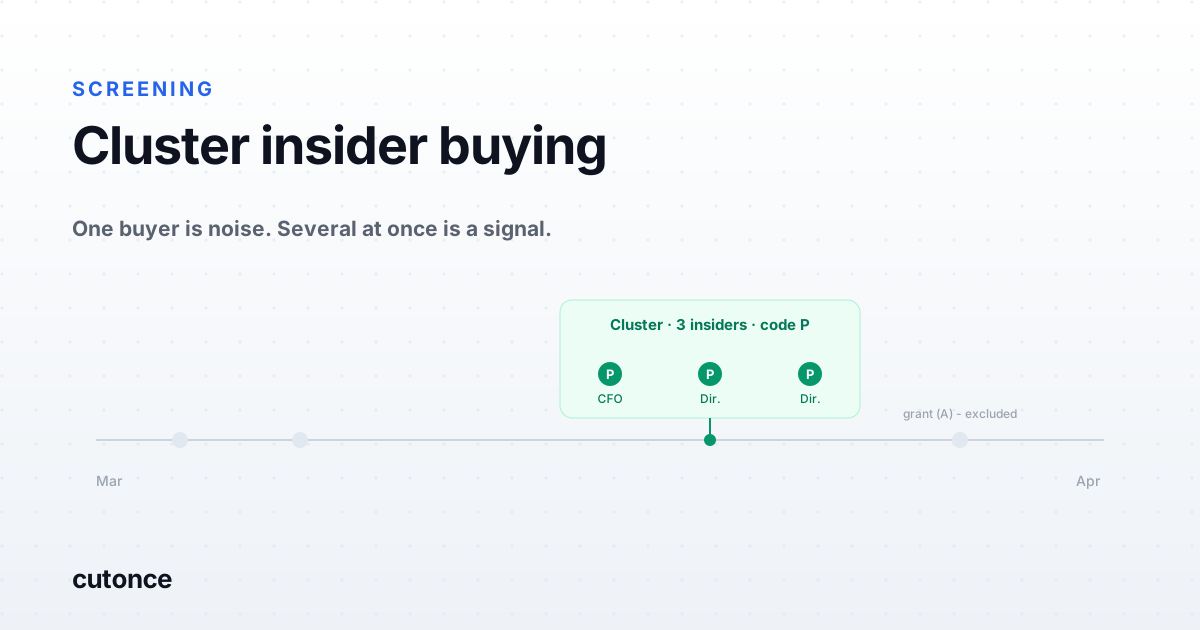
- A single insider buy is weak signal - insiders buy for reasons that have nothing to do with a view on value. A cluster of independent open-market purchases in a short window is far more robust, and this is well documented in the research.
- Real clusters are made of code-P open-market purchases by multiple unrelated insiders, sized meaningfully against their own holdings, outside routine plan windows. Grants, option exercises, and tax events are not part of a real cluster.
- The signal is strongest when the insiders are diverse (not just one family or one 10% holder topping up) and when the buying is fresh relative to the price move, not chasing it.
- Finding clusters is a screening problem across a universe and over time, not something you spot by watching a single ticker - which is exactly what a pipeline filtered on transaction code is built to do.
Insider buying gets a lot of attention and most of it is misplaced, because most of it is about a single insider buying a single block of stock. That is a weak signal: insiders buy for all sorts of reasons that have nothing to do with thinking the stock is cheap. The version worth paying attention to is the cluster - several insiders, buying independently, on the open market, inside a short window. That is a genuinely different and more durable signal, and it is also one that single-buy screeners systematically miss. Here is what makes a cluster real and how to find them.
What is cluster insider buying?
A cluster is when multiple distinct insiders - different officers and directors, not one person adding twice - buy shares on the open market within a compressed period, typically a few weeks. The logic is statistical, not mystical. Any one insider's purchase is full of idiosyncratic noise: they were required to hold more, they wanted to send a signal, they had cash to deploy. When several unrelated insiders buy at the same time with their own money, those individual reasons tend to cancel out, and what is left is the thing they have in common - a shared read on the business that outsiders do not yet have.
Why a cluster beats a single buy
Decades of academic and practitioner research point the same way: aggregated and clustered insider buying carries more predictive content than isolated transactions, because it is harder to explain away. A CFO topping up once is a data point. The CFO, two independent directors, and a VP of sales all buying inside three weeks is a pattern - and patterns across people who see the internal numbers are worth a look, especially when the market has not repriced yet.
The flip side matters too: insider selling is far noisier than buying, because insiders sell for taxes, diversification, and liquidity constantly. Clustered buying is the cleaner signal precisely because there is really only one reason to put personal capital in.
What makes a cluster worth acting on
Not every group of buys is a real cluster. The ones worth your attention share these traits:
| Trait | Why it matters |
|---|---|
| Open-market purchases (code P) | Only discretionary buys count. Grants and option exercises are compensation, not conviction. |
| Multiple unrelated insiders | Three independent buyers beat one insider buying three times. Diversity of buyers is the whole point. |
| Meaningful size | A purchase that is large relative to the insider's existing holdings or annual comp signals more than a token buy. |
| Tight time window | Buying compressed into weeks suggests a common trigger, not coincidence. |
| Not chasing the move | Buying before or into weakness is more telling than buying after a rally the insiders missed. |
The false clusters to filter out
This is where most insider screeners go wrong, because they count share movements without reading the transaction code. Several things look like a buying cluster and are not:
- Grants vesting together. A board-wide equity grant hitting on the same day is several code-A acquisitions, not a cluster of decisions to buy.
- Option exercises. Code-M exercises around the same date are a compensation event, often paired with an immediate sale.
- 10b5-1 plan buys. Pre-scheduled automatic purchases are not a fresh, discretionary read on value.
- One 10% holder averaging in. A single large holder buying repeatedly is one opinion, not a cluster of independent ones.
The fix is to filter on the Form 4 transaction code and keep only genuine open-market purchases - the distinction laid out in Form 4 transaction codes, explained. If your screen counts A, M, and F alongside P, it is finding payroll events and calling them clusters.
Screening for clusters across a universe
You cannot find clusters by watching one ticker - by definition the signal lives across many names and only appears when you group transactions by company and time. That is a screening problem, and a repeatable one: pull every Form 4 across your universe, keep only code-P open-market purchases, then group by company and rolling time window to surface the names where several distinct insiders bought at once.
That is one of the screens analysts build on Cutonce - an insider pipeline filtered on transaction code and clustered by date, so a genuine wave of buying by three officers surfaces as a candidate and a same-day grant never does. You set the thresholds - how many insiders, what window, what minimum size - and the pipeline applies them to every filing, so you are reviewing a shortlist of real clusters instead of scrolling a raw feed of Form 4s.
Note: this is not investment advice, and insider buying - clustered or not - is one input among many, not a thesis. Signals decay as they become widely known, and every cluster deserves a look at why the insiders might be buying before you act. Verify transactions against EDGAR.
Frequently asked
What is cluster insider buying? It is when several corporate insiders - different officers and directors - independently buy shares on the open market within a short window, often a few weeks. Unlike a single insider purchase, a cluster reflects a shared view forming across people who know the business, which research finds is a more reliable signal than any one buy.
Why is a cluster of insider buys a stronger signal than one buy? A single insider buys for many reasons unrelated to value - optics, a financing requirement, portfolio rebalancing. When multiple unrelated insiders buy at once with their own money, the idiosyncratic reasons wash out and what remains is a common signal, which is harder to explain away and historically carries more predictive content.
Which insider transactions count toward a real cluster? Only open-market purchases - transaction code P on the Form 4. Grants (A), option exercises (M), and shares withheld for taxes (F) are compensation events, not discretionary buys, and should be excluded. Screening on the transaction code is what separates a real cluster from payroll.
How do you screen for cluster insider buying across many stocks? You pull every Form 4 across your universe, filter to code-P open-market purchases, then group by company and time window to find names where multiple distinct insiders bought inside the same span. Doing this by hand does not scale; a pipeline filtered on transaction code and clustered by date does.