Form 4 transaction codes, explained
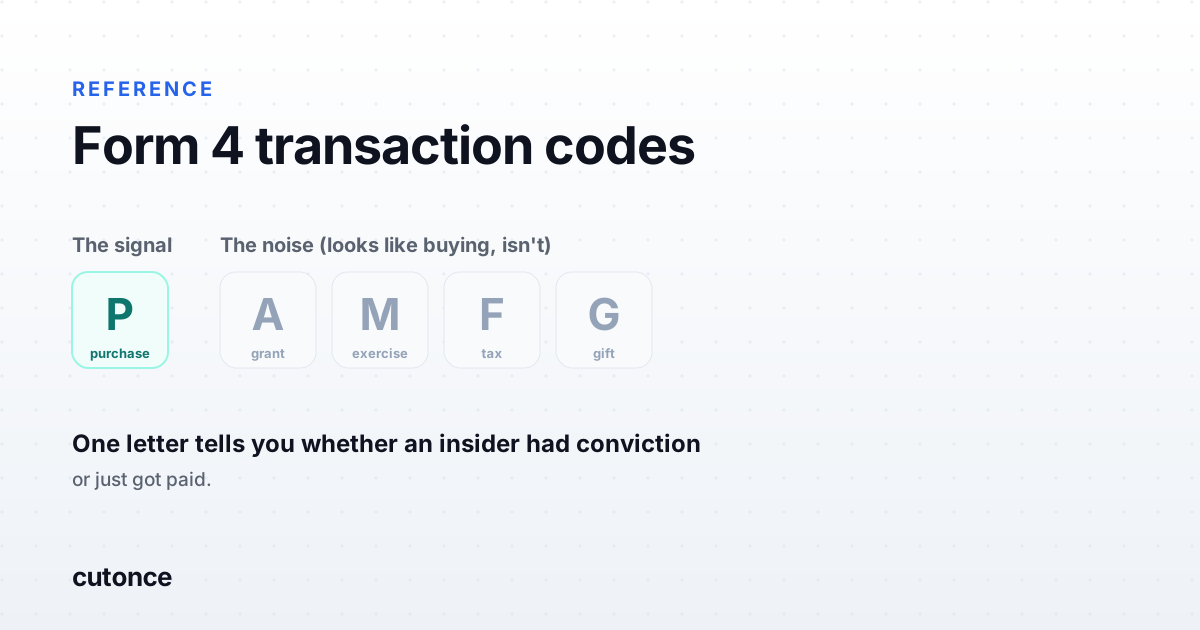
- A Form 4 transaction code is the single-letter tag that tells you what an insider actually did. It is the difference between a purchase, a routine grant, and shares withheld to pay taxes - transactions that look similar in a dollar figure but mean opposite things.
- Only a few codes represent a discretionary decision to buy or sell with the insider's own money. P (open-market purchase) is the one that carries the most signal; most other acquisition codes are compensation, not conviction.
- Codes like A (grant), M (option exercise), and F (shares withheld for taxes) routinely get miscounted as insider buying or selling by screeners that only look at share counts. Reading the code is what separates signal from noise.
- Insider-buying signal is strongest in aggregate - cluster buys, open-market purchases across several insiders - which is a screening problem across a universe, not a one-filing read.
Every transaction on an SEC Form 4 carries a single-letter code in the transaction-code column, and that letter is the whole story. It tells you whether an insider bought shares with their own money, was handed a grant, exercised options, or had stock withheld to cover a tax bill. Those events can look identical if you only read the share count, and they mean completely different things. Here is the full list, followed by the part that actually matters for research: which codes carry signal and which are noise.
What is a Form 4 transaction code?
A Form 4 is the filing an insider - an officer, director, or 10%+ owner - must submit to the SEC, generally within two business days, when their holdings change. Each line of the filing describes one transaction, and the transaction code is the standardized tag defined in the SEC's Form 4 instructions that classifies what happened. Read the code first; the dollar figure means nothing until you know which kind of event produced it.
The full list of Form 4 transaction codes
The codes fall into groups. The general and open-market codes are the ones you will read most; the rest cover derivatives, exempt transactions, and edge cases.
General transaction codes
| Code | Meaning |
|---|---|
| P | Open-market or private purchase of securities |
| S | Open-market or private sale of securities |
| V | Transaction voluntarily reported earlier than required |
Rule 16b-3 codes (compensation-related)
| Code | Meaning |
|---|---|
| A | Grant, award, or other acquisition of securities from the company |
| D | Disposition of securities back to the company |
| F | Payment of exercise price or tax liability by delivering or withholding securities |
| I | Discretionary transaction (e.g. under a benefit plan) increasing or decreasing holdings |
| M | Exercise or conversion of a derivative security exempt under Rule 16b-3 |
Derivative securities codes
| Code | Meaning |
|---|---|
| C | Conversion of a derivative security |
| E | Expiration of a short derivative position |
| H | Expiration (or cancellation) of a long derivative position with value received |
| O | Exercise of an out-of-the-money derivative security |
| X | Exercise of an in-the-money or at-the-money derivative security |
Other exempt and miscellaneous codes
| Code | Meaning |
|---|---|
| G | Bona fide gift |
| L | Small acquisition under Rule 16a-6 |
| W | Acquisition or disposition by will or the laws of descent and distribution |
| Z | Deposit into, or withdrawal from, a voting trust |
| J | Other acquisition or disposition (explained in a footnote) |
| K | Transaction in an equity swap or similar instrument |
| U | Disposition pursuant to a tender of shares in a change-of-control transaction |
Which codes actually signal conviction?
For research, the codes are not equal. The question is always: did the insider make a discretionary decision to put their own capital at risk? By that test, one code stands out.
- P (purchase) is the signal. An insider bought on the open market with their own money. It is voluntary, it costs them, and decades of research find open-market insider buying - especially clustered across several insiders - carries genuine predictive content.
- S (sale) is ambiguous. Insiders sell for taxes, diversification, a new house. A single sale says little; a pattern, or sales during a buyback, says more.
- A (grant) is compensation, not conviction. The shares were given to the insider. It increases holdings but reflects a board's pay decision, not the insider's market view.
The codes that look like buying or selling but are not
This is where naive insider screeners go wrong. Several codes move the share count in a way that a share-count-only filter misreads:
- M (option exercise) increases shares held, but it is exercising compensation, not a market buy. It is usually paired with an S or F on the same day.
- F (shares withheld for taxes) decreases the share count and gets logged as "selling" by tools that only watch the number - but it is a mechanical tax event, not a decision to sell.
- A (grant) inflates "insider buying" totals on screeners that count any acquisition as a buy.
- G (gift) moves shares with no market transaction at all.
If your insider signal counts A, M, and F alongside P, it is measuring payroll, not conviction. Filtering to genuine open-market activity is the entire game.
Screening for real insider buying across a universe
Reading one Form 4 correctly is a five-minute skill once you know the codes. The signal, though, lives in aggregate - clusters of P purchases across multiple insiders, at multiple companies, filtered clean of grants and tax events. That is a screening problem, not a reading problem, and it is exactly what a pipeline is for: pull every Form 4 across your universe, keep only the codes that carry signal, and surface the clusters worth a closer look.
That is one of the things analysts build on Cutonce - an insider screen that filters on transaction code, so a wave of code-P buying by three officers at once shows up as a signal, and a routine tax-withholding F never gets mistaken for one. You define what counts as conviction; the pipeline applies it to every filing so you are not reading transaction codes one PDF at a time.
Note: this is a plain-language reference to the SEC's Form 4 transaction codes, not investment advice, and code definitions can be revised - check the current SEC Form 4 instructions for the authoritative wording. Insider activity is one input among many; verify any filing against EDGAR before acting on it.
Frequently asked
What does transaction code P mean on a Form 4? P is an open-market or private purchase - the insider bought shares with their own money. It is the code most associated with genuine insider conviction, because unlike a grant, nobody handed the shares to the insider.
What is the difference between code A and code P? P is a purchase the insider chose to make and paid for. A is a grant, award, or other acquisition - typically equity compensation the company gave them. Both increase the insider's holdings, but only P reflects a decision to put personal capital at risk.
What does code F mean, and is it insider selling? F is the payment of an option's exercise price or a tax liability by delivering or withholding shares. It reduces the insider's share count, so naive screeners read it as selling, but it is a mechanical tax event tied to compensation - not a discretionary decision to sell.
What does code M mean on a Form 4? M is the exercise or conversion of a derivative security, such as exercising stock options into shares. It is often paired with an S (sale) or F (tax withholding) on the same filing, and on its own it is a compensation event rather than an open-market signal.