The best AI stock screeners in 2026 (and what "AI" actually means)
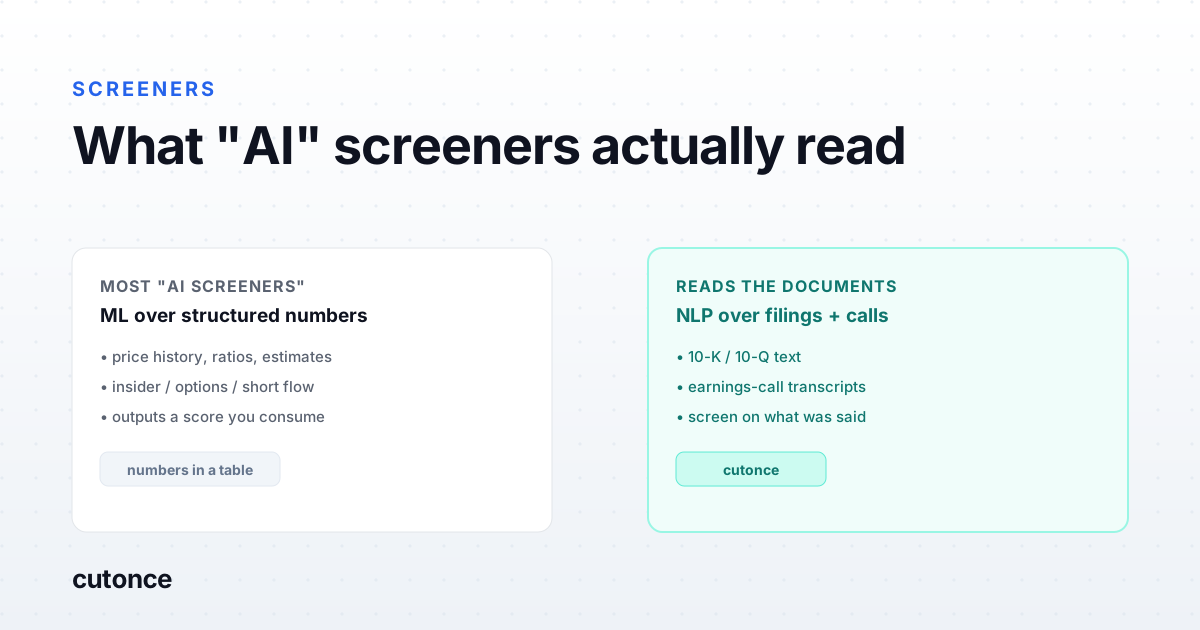
- "AI stock screener" usually means machine learning over structured, numeric data (price history, ratios, estimates, insider flows) - not AI reading the text of filings or earnings calls.
- Danelfin is the clearest example: its 1-10 AI Score is built from ~900 structured indicators, and its 'sentiment' inputs are analyst targets, short float, and options flow - transactional data, not language analysis.
- Reading the actual text of 10-K/10-Q filings and earnings-call transcripts with NLP is rare outside enterprise market-intelligence platforms. Among tools an independent analyst can actually use, it is close to a category of one.
- The useful question is not 'is it AI?' but 'what does the AI read, and can I verify it?' Structured-data ML and document-reading NLP are different capabilities for different jobs.
"AI stock screener" is one of the most overloaded phrases in 2026 fintech marketing. Almost every screener now claims AI, and most of the claims are true in a narrow, unhelpful way. The useful question is not "does it use AI?" but "what does the AI actually read, and can you check its work?" Answer that and the category sorts itself into two very different groups.
What most "AI screeners" actually do
The large majority of AI screeners are machine learning over structured, numeric data. They learn patterns from price history, fundamental ratios, analyst estimates, insider and institutional flows, short interest, and options data, then output a score, a rank, or a probability. That is real, useful machine learning. It is also not the same thing as an AI that reads. The inputs are numbers in a table, not the language of a filing or a call.
Danelfin: the clearest example
Danelfin is the tool people most often mean by "AI screener," so it is worth being precise. Its AI Score (1-10) is built from roughly 900 structured indicators - about 600 technical, 150 fundamental, and 150 "sentiment." But those sentiment inputs are analyst price targets, EPS estimates, short float, insider and hedge-fund transactions, institutional ownership, and options flow. All of it is transactional or numeric. None of it is analysis of the text of a 10-K or an earnings call. Danelfin is a genuinely sophisticated ratings product - a ranked signal you consume - but it does not read documents, and it is not a pipeline you build.
The rare category: AI that reads the filings and calls
Reading the actual text - a 10-K, a 10-Q, an earnings-call transcript - and turning what it says into a screen is a different and harder capability. In the enterprise world, market-intelligence platforms like AlphaSense do natural-language sentiment analysis on transcripts (tone scoring, summaries). But those are priced and built for institutions, not for a boutique RIA or an independent analyst running their own process. Among tools that group can actually use, document-reading AI screening is close to a category of one.
This is the gap Cutonce was built for. Its AI nodes read 10-K/10-Q filings and earnings-call transcripts at scale, so you can screen on qualitative signals - management tone and candor, year-over-year risk-factor changes, accounting red flags - and combine them with the usual numeric filters in one no-code pipeline. You can see the difference in practice in screening a 10-K for red flags and reading earnings-call sentiment.
How to tell signal from marketing
When a tool says "AI," ask four questions:
- What does the AI read? Structured numbers, or the text of filings and calls? These are different products.
- Can you verify it? Does it show you the passage or the number behind a score, or is it a black box? An unverifiable score is a liability.
- Do you consume it or build it? A fixed ranking (like Danelfin) is different from a pipeline where you define the criteria.
- Does it run on your schedule? A one-off score is not a workflow. Research at scale means the same logic re-run across a universe, on a schedule.
So which AI screener should you use?
If you want a ready-made probability score over structured data, Danelfin and similar ratings tools are legitimately good at that, and you consume the output. If you want to screen on what the documents actually say - and to build and re-run that logic yourself across your universe - that is a research pipeline, and it is what Cutonce does. The honest framing is that these are complementary: numeric ML scores are one input; reading the filings is another; the analyst combining them is still the one in control. Compare the landscape in more detail on the comparison pages.
Note: capabilities and pricing move quickly, and any tool can ship new features - re-check the vendor's current docs before relying on this. Nothing here is investment advice, and an AI score, however sophisticated, is one input to a process you control, not a decision.
Frequently asked
What is an AI stock screener? In practice, a screener that uses machine learning to rank or score stocks. Almost all of them learn from structured numeric data - price history, fundamentals, estimates, insider and options flow - and output a score or probability. Few use natural-language AI to read the text of filings or earnings calls.
Is Danelfin an AI stock screener? Danelfin is an AI ratings product: it scores stocks 1-10 daily from about 900 structured indicators to estimate the probability of beating the market over 30-90 days. It is powerful, but it is a signal you consume, not a pipeline you build, and its 'sentiment' is transactional data, not analysis of filing or transcript text.
Which AI screener actually reads earnings calls and filings? Reading the text of 10-K/10-Q filings and earnings-call transcripts with AI is rare. Enterprise platforms like AlphaSense do NLP sentiment on transcripts, but they are not retail screeners. Among tools built for independent analysts and boutique RIAs, Cutonce is built specifically to read filings and calls at scale as screen criteria.